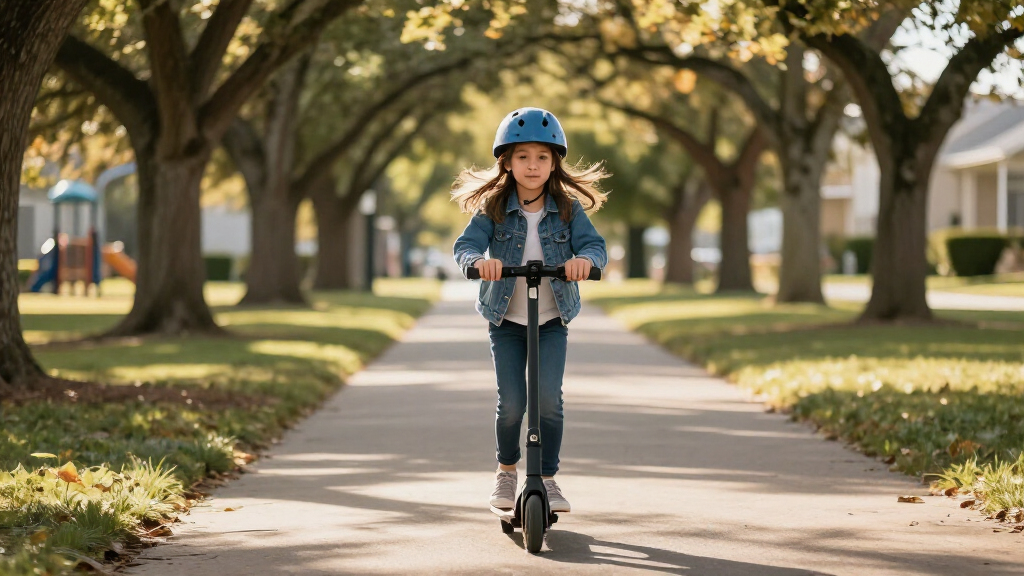
For most families, I’d start with the Segway Ninebot C2 as the best overall choice, while the Gotrax GKS Mini stands out for younger or first-time riders and the QWAYQ 350W models offer more speed and range for older kids. The main tradeoff is straightforward: a compact, slower scooter is easier for new riders to manage, while a more powerful model may suit longer rides but calls for closer attention to age, fit, and riding conditions. Options with adjustable handlebars can accommodate growth, and light-up wheels add visibility and appeal, but neither feature replaces sound braking or adult supervision. Range, speed, portability, and riding experience vary across these 14 models, so I’d match the scooter to the child and the places they can legally and safely ride. Read on for the full breakdown, buying advice, and answers to common questions.

Turn the school run and nap time into listening time
- Thousands of audiobooks, podcasts and originals
- Listen on your phone, tablet or Echo — also offline
- Cancel anytime
Complete the kit


Key Takeaways
- The lineup splits into distinct riding levels: the Gotrax GKS Mini’s listed 7.5 mph top speed and 3.75-mile range favor shorter, beginner rides, while the QWAYQ 350W options list 12 mph and 10 miles for families seeking more performance.
- Some entries appear to be near-duplicates: the two Gotrax GKS Mini listings share the same stated motor, speed, and range, and the QWAYQ models share key performance figures; compare the exact listing and included features rather than assuming the names mean different ride capabilities.
- Fit is not just about age labels: adjustable-height options such as the LINGTENG and ECOROAD EK6 may offer more room to adapt, but a child must still be able to reach controls and handle the scooter comfortably.
- Three wheels and a seat change the riding experience: the three-wheel model and Hiboy Q2 Lite with seat may appeal to children who want a different stance, but they are not direct substitutes for a conventional standing scooter.
- Feature lists do not settle safety questions: solid tires, lights, and dual brakes are useful differentiators on some models, but buyers should verify braking operation, fit, protective gear, and the maker’s age and weight guidance before riding.




| kids electric scooter | Recommended age | Brakes | Weight | Maximum range |
|---|---|---|---|---|
| QWAYQ Electric Scooter for Kid | 8 years and up | E-ABS and rear foot brake | — | — |
| LINGTENG Electric Scooter for | 6–9 years | — | 10 lb | — |
| FanttikRide C9 Pro Kids Electr | 8–12 years | Rear foot brake and rear EABS | — | — |
| QWAYQ Kids Electric Scooter | 8 years and up | E-ABS and rear foot brake | — | — |
| Gyroor Kids Electric Scooter w | 3–8 years | — | 9.3 lb | — |
| Gotrax GKS Mini Electric Scoot | 6–12 years | Electronic brake and rear-foot brake | 16.3 lbs | 3.75 miles |
| Gotrax GKS Mini Electric Scoot | 6–12 years | — | 16.3 lb | 3.75 miles |
| Hiboy Q2 Lite Electric Scooter | 4–10 years | Front braking | 25.8 pounds | 5 miles |
| WERHY Foldable Electric Scoote | — | — | — | — |
| ECOROAD EK6 Kids Electric Scoo | 6–12 years | Finger-dial electronic brake and rear-fender foot brake | — | 7 miles |
| WERHY Kids Electric Scooter | — | Electronic brake and drum brake | 22 lb in description; 26 lb in specifications | — |
| SIMATE S5 Electric Scooter for | — | Electronic brake and foot brake | — | 5 miles |
| Kids’ 3-Wheel Electric Scooter | — | — | 9 lb | 5 miles |
| Segway Ninebot C2 Kids Electri | 6–10 years | Rear drum brake and mechanical handbrake | — | 8.7 miles |
More Details on Our Top Picks
QWAYQ Electric Scooter for Kids, 350W Peak Motor, 12 MPH, 10-Mile Range, Foldable
I’d shortlist the QWAYQ for families seeking more speed and stated range than the younger-rider options here. Its three modes top out at 12 mph, while the LINGTENG E8 is capped at 6 mph and better suits cautious beginners. The QWAYQ’s adjustable handlebars, 175-pound capacity, and 17-pound folding frame also give it room to fit a growing rider and make it easier to carry than a heavier scooter.
The tradeoff is that its claimed 10-mile range depends on riding conditions, and solid wheels with no suspension offer less cushioning on rough paths. A push is also required before the motor engages at 2 mph. I’d choose it for older children ready for its higher speed settings, not as the gentlest first ride.
Pros:- Three speed modes let riders build confidence before using the 12 mph setting.
- Adjustable handlebars and a 175-pound capacity accommodate growth.
- Folding 17-pound aluminum frame is manageable for storage and carrying.
- E-ABS and rear foot braking provide two braking methods.
Cons:- Rigid setup and solid wheels provide limited cushioning on uneven ground.
- Motor requires a push to 2 mph before it activates.
- The stated range can vary with rider load and riding conditions.
Best for: Families with riders aged 8 and up who want multiple speed settings, adjustable fit, and a foldable scooter for longer outings.
Not ideal for: Young or tentative beginners who need a lower top speed, or riders who regularly travel over rough surfaces and would benefit from more cushioning.
- Recommended age:8 years and up
- Motor:180 W rated, 350 W peak
- Speed modes:5, 8, and 12 mph
- Maximum stated range:10 miles
- Battery:25.2 V, 5.2 Ah
- Wheels:7-inch solid rubber
- Brakes:E-ABS and rear foot brake
- Weight and capacity:17 lb; 175 lb maximum load
- Certification:UL2272 certified by SGS
Our verdict“Choose this QWAYQ for an older child who wants a higher speed ceiling and longer stated range, and skip it for a beginner who needs a gentler pace.”
LINGTENG Electric Scooter for Kids Ages 6–9 with Adjustable Speed and Height, Light-Up Wheels and Deck
The LINGTENG E8 puts a gentler pace ahead of speed: its two settings reach 4 or 6 mph, compared with the QWAYQ’s 12 mph maximum. That makes it a more approachable match for younger children who are still learning how an electric scooter responds. The motor’s kick-start activation means the child must push off before power engages, and the E8 can also be ridden as a kick scooter when they want to practice without motor assistance.
At 10 pounds, it’s the easiest pick here to carry, and dual suspension is a useful difference from the rigid QWAYQ and Gyroor options. Its lower speed and 110-pound limit narrow its useful life, though, and the stated 10-mile range shouldn’t be treated as guaranteed. I’d favor it for a young beginner, not an older child seeking more pace.
Pros:- Two low speed settings suit riders who are learning.
- Weighs 10 pounds and can be carried more easily than the 17-pound QWAYQ.
- Dual suspension offers cushioning absent from the rigid Gyroor.
- Can be used without motor power as a kick scooter.
Cons:- The 6 mph maximum may feel limiting as a child gains experience.
- The 110-pound maximum load gives less room to grow than the QWAYQ.
- A full charge takes 5 hours.
Best for: Parents of children around ages 6–9 who want a lightweight, low-speed scooter that can also be used as a kick scooter.
Not ideal for: Older or taller children who have outgrown the 110-pound limit or want more than a 6 mph top speed.
- Recommended age:6–9 years
- Speed settings:4 and 6 mph
- Maximum stated range:10 miles
- Riding time:Up to 65 minutes
- Handlebar heights:27.5, 29, 30.7, and 31.8 inches
- Maximum load:110 lb
- Weight:10 lb
- Wheels and suspension:6-inch polyurethane wheels; dual suspension
- Brake:Rear fender/foot brake
Our verdict“Pick the LINGTENG for a younger beginner who values low speed and easy carrying over the higher performance of the QWAYQ.”
FanttikRide C9 Pro Kids Electric Scooter with Rainbow Lights
The FanttikRide C9 Pro is the visual-feature pick: five light patterns, pedal-area LEDs, and an LED display make riding information and scooter lighting more prominent than on the simpler LINGTENG E8. Its three speeds—5, 8, and 10 mph—also give an 8–12-year-old more room to progress than the E8’s 6 mph ceiling, without matching the 12 mph QWAYQ.
The compromise is range: its stated maximum is about 5 miles, half the QWAYQ’s claim, so it suits shorter trips better than extended rides. It weighs 14 pounds and folds in one step, but has no suspension; the QWAYQ also has solid wheels, while the LINGTENG adds dual suspension. I’d pick this for a child who values adjustable speed and lighting, provided routes are smooth and outings are modest.
Pros:- Three speed choices span beginner and more confident riding.
- Five light patterns and pedal-area LEDs distinguish it from the basic LINGTENG.
- LED display shows speed, battery status, and pedal mode.
- One-step folding supports storage and transport.
Cons:- Stated range is about 5 miles, shorter than the QWAYQ’s 10-mile claim.
- No suspension means less cushioning on uneven surfaces.
- Maximum capacity of 132.3 pounds is below the QWAYQ’s 175-pound limit.
Best for: Families with children aged 8–12 who want visible lighting, a speed display, and several speed settings for short rides.
Not ideal for: Riders who need longer outings, a higher weight capacity, or suspension for bumpy routes.
- Recommended age:8–12 years
- Recommended rider height:3.9–5.2 ft
- Speed settings:5, 8, and 10 mph
- Maximum stated range:Approximately 5 miles
- Ride time:Up to 40 minutes
- Maximum capacity:132.3 lb
- Handlebar heights:31.7, 34.1, and 36.5 inches
- Brakes:Rear foot brake and rear EABS
- Weight and folding:14 lb; one-step folding
Our verdict“Choose the C9 Pro for a lighting-focused, short-range ride with several speed options, rather than the longer-range QWAYQ.”
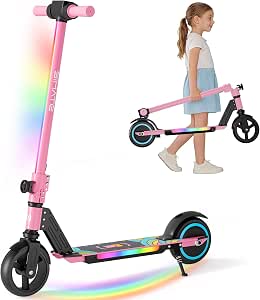
QWAYQ Kids Electric Scooter, 350W Peak Motor, 12 MPH, 10-Mile Range, Foldable with LED Lights and Adjustable Handlebar
This QWAYQ shares the other QWAYQ’s core combination: a 12 mph top speed, three modes, claimed 10-mile range, solid 7-inch wheels, and a 17-pound folding frame. Its distinctive case is the listed LED headlight, deck and stem lights, and digital display, alongside E-ABS and a rear foot brake. Against the FanttikRide C9 Pro, it trades the C9 Pro’s five flash patterns for a higher top speed and longer stated range.
That extra pace makes it a better fit for an older, confident child than for a first-time rider; the LINGTENG E8 is the milder choice at up to 6 mph. As with the other QWAYQ, a push to 2 mph is needed to start the motor, and the solid-wheel setup has no stated suspension. I’d choose this model when its pink finish and listed display-and-light package are the deciding factors.
Pros:- Three speed modes offer a lower setting before reaching 12 mph.
- E-ABS and rear foot brake provide two braking methods.
- Digital display and headlight, deck, and stem lights add useful visibility and ride information.
- Folds and weighs 17 pounds for easier storage than a bulkier scooter.
Cons:- Solid wheels and rigid setup provide limited cushioning on rough surfaces.
- Motor only engages after a push to 2 mph.
- The stated 10-mile range can vary with conditions.
Best for: Families with riders aged 8 and up who want a faster folding scooter with two braking methods, a display, and integrated lights.
Not ideal for: New or cautious riders who would be better served by the LINGTENG E8’s lower 6 mph speed limit, or children riding mainly on rough paths.
- Recommended age:8 years and up
- Motor:180 W rated, 350 W peak
- Speed modes:5, 8, and 12 mph
- Maximum stated range:10 miles
- Battery:25.2 V, 5.2 Ah
- Wheels:7-inch solid rubber
- Brakes:E-ABS and rear foot brake
- Handlebar heights:33.5, 35.5, and 39.5 inches
- Weight and capacity:17 lb; 175 lb maximum load
Our verdict“Pick this QWAYQ if its display and integrated lights matter alongside higher speed; choose the LINGTENG instead for a younger beginner.”
Gyroor Kids Electric Scooter with LED Light-Up Wheels and Deck
The Gyroor is the gentlest-speed option in this group, with a 100W motor capped at 5 mph and a listed age range of 3–8 years. That makes it a closer match for very young riders than either QWAYQ, both of which reach 12 mph, or the FanttikRide C9 Pro, which starts at 5 mph but reaches 10. Wheel and deck lights add a playful visual feature, while its 9.3-pound weight is even easier to lift than the LINGTENG’s 10 pounds.
The tradeoff is a short growth window: two handlebar heights, a 110-pound rider limit, and a 5 mph ceiling make it less suited to older or more confident children. Its 4-inch plastic wheels and rigid suspension also point toward smooth surfaces. I’d consider it for a small child’s supervised first scooter, not for longer outings or bumpy paths.
Pros:- 5 mph maximum is lower than the QWAYQ and FanttikRide, suiting very young riders.
- At 9.3 pounds, it is the lightest option among these five.
- Multicolor lights illuminate both the wheels and deck.
- Textured anti-slip deck and rear foot brake provide practical riding features.
Cons:- The 110-pound rider limit and two handlebar heights restrict room to grow.
- Small 4-inch plastic wheels and rigid suspension offer little cushioning on rough ground.
- Its 5 mph maximum may become limiting as a child gains confidence.
Best for: Families seeking a lightweight, low-speed electric scooter for a young child aged 3–8 who will ride under adult supervision.
Not ideal for: Older children who want more speed or a longer-lasting fit, and riders who need cushioning on uneven routes.
- Recommended age:3–8 years
- Motor power:100 W
- Maximum speed:5 mph
- Handlebar heights:29.5 and 33.5 inches
- Maximum rider weight:110 lb
- Wheels:4-inch solid plastic
- Brake:Rear fender foot brake
- Battery and charge time:2.6 Ah; 4 hours
- Weight:9.3 lb
Our verdict“Choose the Gyroor for a young, supervised beginner who values a light scooter and a low speed cap, not for an older child seeking room to progress.”
Gotrax GKS Mini Electric Scooter for Kids, 150W, 7.5 mph, 3.75-Mile Range
I’d choose the GKS Mini for a child who is ready for a simple, low-speed first electric scooter. Its 7.5 mph top speed is more restrained than the ECOROAD EK6’s 10 mph setting, while kick-to-start activation helps reduce accidental launches from a standstill. A second, rear-foot brake gives a child another way to stop alongside the electronic brake. At 16.3 pounds, it is also easier for an adult to carry than the seated Hiboy Q2 Lite, though this model gives up that scooter’s seat and longer stated range. The tradeoff is limited distance: up to 3.75 miles and a six-hour charge make it better for short outings than repeated rides throughout the day. Its solid wheels avoid punctures, but the lack of suspension can make rough paths less comfortable.
Pros:- 16.3-pound weight makes it relatively easy for an adult to carry.
- Kick-to-start activation helps limit accidental acceleration from a stop.
- Electronic and rear-foot brakes offer two stopping methods.
- Solid rubber wheels resist punctures.
Cons:- Stated range is limited to 3.75 miles.
- Six-hour charging time can make back-to-back outings inconvenient.
- No suspension to soften uneven surfaces.
Best for: Families seeking a light, straightforward first scooter for a child ages 6–12 who will ride short distances on smoother paths.
Not ideal for: Children who need a longer-range ride, a seat, or extra cushioning on uneven pavement.
- Recommended age:6–12 years
- Motor power:150W
- Maximum speed:7.5 mph
- Maximum range:3.75 miles
- Maximum weight capacity:120 lbs
- Weight:16.3 lbs
- Brakes:Electronic brake and rear-foot brake
- Certifications:UL-2272 and CPC
Our verdict“Pick the GKS Mini for a child’s short, supervised rides when low weight and a restrained top speed matter more than range or ride cushioning.”
Gotrax GKS Mini Electric Scooter for Kids, 150W, 7.5 mph, 3.75-Mile Range
This light-pink GKS Mini suits families who want a basic kids’ scooter that is quick to put together: listed assembly takes about 5–10 minutes. Like the other GKS Mini listing, it pairs a kick-to-start throttle with electronic and rear-foot brakes, but this product record specifically calls out simple assembly and a non-slip deck. Its 7.5 mph maximum speed is slower than the ECOROAD EK6’s 10 mph top setting, a useful distinction for families prioritizing a more restrained pace over speed options. The tradeoffs are also similar: the range is capped at 3.75 miles, the battery takes six hours to charge, and there is no suspension. Compared with the seated Hiboy Q2 Lite, it is substantially lighter, but it lacks a seat and the Hiboy’s three selectable speeds.
Pros:- Listed assembly time is about 5–10 minutes.
- Light 16.3-pound build is easier to lift and store than the Hiboy Q2 Lite.
- Kick-to-start throttle helps reduce unintended starts.
- Electronic and rear-foot brakes provide two stopping methods.
Cons:- Maximum stated range is 3.75 miles.
- Six-hour charging time requires planning between rides.
- Rigid, unsuspended ride offers less comfort on rough ground.
Best for: Parents who want a lightweight, low-speed scooter for a child ages 6–12 and prefer a setup listed as taking just 5–10 minutes.
Not ideal for: Families looking for speed modes, a seated ride, longer trips, or a scooter suited to bumpy paths.
- Recommended age:6–12 years
- Motor power:150W
- Maximum speed:7.5 mph
- Maximum range:3.75 miles
- Weight:16.3 lb
- Maximum weight capacity:120 lb
- Wheel size and type:6-inch solid rubber
- Assembly time:About 5–10 minutes
- Warranty:1-year limited
Our verdict“Choose this GKS Mini when fast setup and a light, straightforward ride matter more than selectable speeds, range, or a seat.”
Hiboy Q2 Lite Electric Scooter for Kids with Seat
The Hiboy Q2 Lite stands apart from the standing Gotrax GKS Mini by giving younger riders a cushioned seat and three speed modes: 4, 6, and 9.3 mph. That range of settings can help families start gently and allow more speed as a child gains confidence, while the GKS Mini keeps things simpler with a lower 7.5 mph ceiling. Hiboy also lists 8.5-inch solid tires, a front brake, and neon and brake lights; it arrives mostly assembled, which reduces setup work. The added comfort and features come with a substantial weight penalty at 25.8 pounds, and its 110-pound capacity is lower than the ECOROAD EK6’s 154 pounds. Five miles of stated range and rigid suspension make it a better fit for shorter, smoother rides than long outings or rough paths.
Pros:- Cushioned seat offers a seated alternative to the standing GKS Mini.
- Three speed modes provide lower settings for less experienced riders.
- 8.5-inch solid tires are designed to resist punctures.
- Mostly assembled delivery and a four-hour charge time simplify use.
Cons:- At 25.8 pounds, it is heavier to lift and store than the GKS Mini.
- 110-pound maximum capacity is lower than the ECOROAD EK6’s listed limit.
- Rigid suspension and a five-mile stated range limit comfort and distance.
Best for: Families with younger riders ages 4–10 who prefer a seated scooter with selectable speed modes and visible lights.
Not ideal for: Children who need a lightweight scooter to carry, riders above 110 pounds, or families expecting comfortable travel over uneven ground.
- Recommended age:4–10 years
- Motor:100W brushless
- Speed modes:4, 6, and 9.3 mph
- Maximum range:5 miles
- Maximum weight capacity:110 pounds
- Tires:8.5-inch solid rubber
- Weight:25.8 pounds
- Brakes:Front braking
- Certification:UL 2272
Our verdict“Pick the Q2 Lite for a younger child who values a seat and speed choices more than a light frame or longer-range riding.”
WERHY Foldable Electric Scooter with 350W Motor
I would not rank the WERHY H0 as a kids’ electric scooter: its own product data labels it for adult commuting, and its stated 19 mph top speed is far above the child-focused Gotrax GKS Mini and ECOROAD EK6. The foldable frame, app controls, cruise control, headlight, taillight, and dual braking system may appeal to an adult commuter, but those features do not make it a suitable substitute for a purpose-built children’s model. The range information is also inconsistent: the description says up to 12 miles, while the specification lists 25 miles. Unlike the GKS Mini, it has no child age guidance or kick-to-start feature, and its no-suspension design offers limited cushioning. I’d exclude it from a kids’ shortlist unless the buyer is actually shopping for an adult ride.
Pros:- Foldable design can simplify storage and transport for an adult commuter.
- Drum brake and EABS regenerative braking provide two braking systems.
- App supports speed and battery monitoring and ride-setting controls.
- Front and rear lights and a handlebar bell support visibility and signaling.
Cons:- Product data identifies adult commuting as its intended use, not children’s riding.
- 19 mph top speed is substantially higher than the kids’ scooters in this roundup.
- Range conflicts between the description’s 12 miles and the specification’s 25 miles.
- No suspension is listed.
Best for: Adults seeking a foldable commuter scooter with app-based ride settings, lights, and dual braking.
Not ideal for: Parents shopping for a child’s first scooter; the listing targets adults and gives a 19 mph top speed without child-specific guidance.
- Model:H0
- Recommended use:Commuting; age range listed as adult
- Motor power:350W
- Top speed:19 mph
- Stated range:Up to 12 miles in description; 25 miles in specifications
- Maximum weight capacity:265 pounds
- Wheels:8.5-inch solid rubber
- Braking system:Drum brake and EABS regenerative anti-lock braking
- Features:Foldable, app integration, cruise control, front headlight, red taillight, and bell
Our verdict“Skip this for a child and consider it only if you are shopping for an adult commuter prepared to verify the conflicting range claim.”
ECOROAD EK6 Kids Electric Scooter, 3-Speed, Adjustable Handlebar, 6.5-Inch Solid Tires
The ECOROAD EK6 is the strongest fit here for a child who may outgrow a fixed-height scooter: its handlebar has three adjustment levels, and the frame is rated up to 154 pounds. That gives it a more adaptable fit than the Gotrax GKS Mini, whose listed capacity is 120 pounds. Its three speed settings—3, 6, and 10 mph—also give families a slower starting option, although the highest setting is quicker than the GKS Mini’s 7.5 mph maximum. Solid tires, an electronic brake plus rear-foot brake, and deck and stem lights round out the practical features. The tradeoff is a rigid ride with no suspension, and the 180-day warranty is shorter than the GKS Mini’s one-year limited warranty. Its stated seven-mile range is also a limit for longer rides.
Pros:- Three-level adjustable handlebar can better fit a growing rider.
- Three speed settings include a 3 mph option for a slower start.
- 154-pound capacity exceeds the GKS Mini’s listed 120 pounds.
- Electronic and rear-foot brakes pair with deck and stem lights.
Cons:- Rigid suspension provides less cushioning on rough surfaces.
- Stated range is limited to 7 miles.
- 180-day warranty is shorter than the GKS Mini’s one-year limited warranty.
Best for: Families seeking a scooter that can accommodate a growing child through an adjustable handlebar, multiple speed settings, and a higher listed weight capacity.
Not ideal for: Parents who want a longer warranty, suspension for uneven paths, or a lower maximum speed than 10 mph.
- Recommended age:6–12 years
- Motor power:150W
- Speed modes:3, 6, and 10 mph
- Maximum range:7 miles
- Maximum weight capacity:154 lbs
- Wheel size and type:6.5-inch solid tires
- Handlebar:Three-level adjustable; listed range 3.9–5.2 ft
- Brakes:Finger-dial electronic brake and rear-fender foot brake
- Safety certification:ANSI/CAN/UL 2272 by TÜV Rheinland
Our verdict“Choose the EK6 for a growing child who can benefit from adjustable height and speed settings, but skip it if suspension or a longer warranty is a priority.”
WERHY Kids Electric Scooter, 350W Motor, 8.5-Inch Solid Tires, Dual Brakes
The WERHY H0 is the most speed-flexible choice in this group: its settings span 8, 11, and 19 mph, so a parent can limit pace as a child gains confidence. That range of settings is a sharper contrast with the Segway Ninebot C2, which tops out at 9.9 mph and is sized specifically for younger riders. WERHY also pairs electronic and drum brakes with front and rear lights, while its solid tires avoid inflation chores. The tradeoff is that the stated 19 mph maximum is a lot for many children, and the listing conflicts on both weight and range: it gives 22 and 26 pounds, and 12 and 15.5 miles. With no suspension, rough paths may feel harsh, too. I’d choose it only when the child’s riding area and supervision match its higher speed potential.
Pros:- Three speed settings give families options as a rider’s confidence changes.
- Electronic and drum brakes provide two braking mechanisms.
- Front and rear lights support visibility.
- Solid tires avoid inflation and puncture concerns.
Cons:- The listed 19 mph maximum may be excessive for many young riders.
- Product details conflict on scooter weight and maximum range.
- No suspension is listed to soften uneven surfaces.
Best for: Families seeking several speed settings for an older or more confident child, with room to set a slower pace at first.
Not ideal for: Parents shopping for a clearly low-speed first scooter or a cushioned ride; its listed top speed reaches 19 mph and it has no suspension.
- Motor:350W
- Speed settings:8, 11, and 19 mph
- Listed range:12 miles in description; 15.5 miles in specifications
- Tires:8.5-inch solid rubber
- Brakes:Electronic brake and drum brake
- Weight:22 lb in description; 26 lb in specifications
- Controls:LED dashboard and smart app
- Foldable:Yes
Our verdict“Choose the WERHY H0 for adjustable pace and dual brakes, but skip it if you need a modest top speed or consistent published specifications.”
SIMATE S5 Electric Scooter for Kids, Foldable with LED Display and Lights
The SIMATE S5 is a more restrained pick for children who fit its stated 4.0–5.3-foot rider-height range. Its start-up assist holds the motor back until the scooter reaches 2 mph, reducing the chance of a sudden powered launch; dual suspension also sets it apart from the unsuspended WERHY H0. The LED display makes speed and battery information visible, and electronic plus foot brakes offer two ways to slow down. The main compromise is reach: its stated 5-mile range suits short neighborhood outings, not long rides. Its 8.7 mph maximum is more modest than the WERHY’s 19 mph setting, but the S5’s 154-pound capacity and age-and-height fit still mean buyers should check the child’s size rather than rely on age alone. I’d favor it for a young rider who needs a calmer, compact setup.
Pros:- Start-up assist delays motor engagement until the scooter is moving.
- Dual suspension is designed to soften the ride.
- Electronic and foot brakes provide two braking methods.
- LED display shows speed, gear, and battery capacity.
Cons:- The stated 5-mile range limits longer outings.
- The 154-pound maximum capacity can rule out larger riders.
- Its recommended rider-height range may not fit children outside 4.0–5.3 feet.
Best for: Families with a beginning rider 4.0–5.3 feet tall who will use the scooter for short outings and benefit from start-up assist.
Not ideal for: Older or taller children, heavier riders over 154 pounds, and families needing range beyond short local rides.
- Age range:6–14 years
- Recommended rider height:4.0–5.3 ft
- Motor:130W
- Maximum speed:8.7 mph
- Maximum range:5 miles
- Weight capacity:154 lb
- Brakes:Electronic brake and foot brake
- Suspension:Dual suspension
- Start-up assist:Motor engages after the scooter reaches 2 mph
Our verdict“Pick the SIMATE S5 for a size-matched beginner who values start-up assist and suspension over longer range.”
Kids’ 3-Wheel Electric Scooter with 150W Motor, Bluetooth, LCD Display, and Light-Up Wheels
This three-wheel scooter takes a different approach from the two-wheel SIMATE S5: its lean-to-steer layout and 5 mph limit favor balance and a slower pace over faster travel. That makes it the most cautious speed choice in this set, while the SIMATE offers a higher 8.7 mph maximum and dual suspension. Here, the appeal is a 9-pound foldable frame, three handlebar heights, and a thumb throttle that lets the scooter be used for regular scooting as well as powered rides. Light-up wheels, stem, and deck add visibility and visual appeal, and the LCD and Bluetooth speaker bring extra features. The tradeoff is a rear foot brake rather than the SIMATE’s two braking methods, plus rigid suspension that won’t cushion rough pavement. Its stated five-mile range also keeps it in short-trip territory.
Pros:- Three-wheel layout and lean-to-steer handling support a stable riding style.
- At 9 pounds, it is lighter to carry than the listed WERHY H0.
- Three handlebar heights accommodate different rider sizes.
- Thumb throttle supports both powered rides and regular scooting.
Cons:- The 5 mph maximum is slower than the SIMATE S5 and Segway Ninebot C2.
- Rigid suspension offers no cushioning on rough surfaces.
- Rear foot brake is the only listed braking method.
Best for: Younger or cautious riders who want three-wheel stability, a low 5 mph ceiling, and an especially light scooter to carry.
Not ideal for: Children seeking faster rides, families prioritizing suspension comfort, or buyers who want more than a rear foot brake.
- Motor:150W brushless
- Maximum speed:5 mph
- Maximum range:5 miles
- Wheel layout:Three wheels
- Handlebar heights:25, 28, and 31 inches
- Weight:9 lb
- Weight capacity:176 lb
- Brake:Rear foot brake
- Features:Foldable, Bluetooth speaker, LCD display, and light-up stem, deck, and wheels
Our verdict“Choose this model for a light, stable, deliberately slow scooter, not for speed or a cushioned ride.”
Segway Ninebot C2 Kids Electric Scooter
The Segway Ninebot C2 gives families a clearly defined size and age target: riders ages 6–10 and 3’7″–4’7″, with a 110-pound capacity. That makes it easier to match to a younger child than the WERHY H0, whose listed capacity is much higher but whose speed reaches 19 mph. The C2’s kick-to-start throttle helps prevent the motor from engaging while stationary, and three riding modes let families choose a more restrained pace. Its drum brake and mechanical handbrake add another stopping method, while UL 2272 and UL 2271 certifications and IPX4 water resistance are useful published details. Still, the 5.5-hour charge time is long beside the SIMATE S5’s four hours, and rigid suspension may feel rough on uneven pavement. Its 8.7-mile range is also less than the WERHY’s stated figures.
Pros:- Three riding modes give families options for different skill levels.
- Kick-to-start throttle helps limit stationary acceleration.
- Drum brake and mechanical handbrake provide two braking methods.
- UL 2272 and UL 2271 certifications and IPX4 water resistance are specified.
Cons:- The 110-pound capacity and recommended 3’7″–4’7″ height range limit who can ride it.
- Charging takes about 5.5 hours.
- Rigid suspension may feel uncomfortable on rough surfaces.
Best for: Families seeking a scooter with a defined young-rider fit, multiple riding modes, and published electrical safety certifications.
Not ideal for: Taller or heavier children outside the stated fit range, or families who need a quick recharge or a more cushioned ride.
- Recommended age:6–10 years
- Recommended rider height:3’7″–4’7″
- Maximum speed:9.9 mph
- Maximum range:8.7 miles
- Run time:Up to 70 minutes
- Weight capacity:110 lb
- Brakes:Rear drum brake and mechanical handbrake
- Water resistance:IPX4
- Certifications:UL 2272 and UL 2271
Our verdict“Choose the Segway Ninebot C2 for a child who fits its stated size range and benefits from riding modes and documented certifications.”
How We Picked
I compared these kids’ electric scooters by looking at the details available for each model: stated speed and range, motor output when provided, adjustability, wheel and brake descriptions, lighting, folding or portability features, and whether the design uses a seat or three-wheel layout. Those details matter because they affect how well a scooter may fit a child’s riding stage, the expected ride length, and the practical work of storing and transporting it. I treated listed specs as claims to verify against the current product listing and manual, not as proof of real-world performance.
The ranking gives more weight to a balanced fit for families than to a single standout spec. Models with clearer use cases and useful combinations of control, adjustability, or portability rank ahead of options whose listed details leave more buyer questions. The Gotrax GKS Mini appears twice with matching stated specifications, and the QWAYQ listings overlap on core figures, so I treat those as closely related choices rather than inventing differences. Where a listing provides little detail—such as a speed, range, age limit, or brake specification—I avoid assuming it is better and recommend checking those points before purchase.
Factors to Consider When Choosing Kids Electric Scooters
Choosing among kids’ electric scooters takes more than comparing speed or a brand name. I’d start with the child’s riding confidence and the route they will use, then check fit, stopping, range, and how much carrying or storage the scooter will require. These broader checks can prevent a common mistake: buying for a child’s future growth or a long spec-sheet range while overlooking whether the scooter is manageable today.
Match Speed to Riding Confidence, Not Just Age
A published top speed is a ceiling, not a target every child should reach. A new rider may do better with a lower-speed option like the listed 7.5 mph Gotrax GKS Mini, while a more experienced child may be ready for a faster model only with adult guidance and a suitable riding area. Check whether speed modes are clearly described and whether an adult can help set them; an “adjustable speed” label alone does not explain how limits work. Avoid buying extra power on the assumption that a child will grow into it, since control and judgment develop at different rates. Local rules can also restrict where children may ride or what scooter types are allowed, so check those before choosing a faster model.
Check Fit in Riding Position
Age ranges are rough guidance, not a substitute for a comfortable stance and reachable controls. With a standing scooter, the child should be able to grip the handlebar securely, operate the controls, and keep a stable posture without stretching or crowding the deck. Adjustable handlebars, like those listed for the LINGTENG and ECOROAD EK6, can help with fit over time, but adjustment range and the maker’s height and weight limits still matter. Avoid choosing a scooter that is too large just to extend its useful life. If possible, check the product’s dimensions and compare them with the child’s current height and reach before ordering.
Treat Braking and Protective Gear as a System
Brake descriptions vary across this lineup, and a feature label cannot tell you how confidently a child can stop in their usual riding conditions. Look for clear instructions on brake controls, inspect how a child reaches them, and practice stopping at low speed in a flat, open area before regular rides. The WERHY model listing dual brakes gives buyers a specific feature to investigate, but it does not remove the need to check the manual and the child’s ability to use them. A helmet that fits properly, along with other protective gear suited to the ride, matters regardless of the scooter’s speed. Avoid treating lights, solid tires, or a larger motor as substitutes for supervision and braking practice.
Estimate Range Around Real Trips
Advertised range is useful for comparing listings, but it may not reflect every child, route, or riding condition. A longer route, hills, frequent stops, rider weight, and battery age can all affect how far a scooter goes between charges. The gap between the Gotrax listing at 3.75 miles and the QWAYQ listings at 10 miles is a meaningful spec-sheet difference, but buyers should leave a margin rather than plan a ride around the full claim. Think about where charging will happen and whether an adult can carry the scooter if the battery runs low. For short neighborhood use, a manageable scooter may matter more than maximum stated range.
Choose Tires and Layout for the Riding Surface
Wheel size, tire type, and the scooter’s overall layout affect comfort and handling, but a brief product title rarely gives enough evidence to predict performance on every surface. Solid tires, listed on the ECOROAD EK6 and one WERHY model, avoid the need to inflate an air tire, though buyers should check the maker’s guidance on ride feel and suitable terrain. A three-wheel design or a seat changes posture and maneuvering, so it may suit a child’s preference but feel unlike a conventional standing scooter. Do not assume a scooter is suitable for rough paths simply because it has larger-looking wheels or a powerful motor. Match the design to smooth, permitted riding areas and inspect the manual for surface limitations.
Weigh Portability Against Durability and Storage
A folding scooter can be easier to store in a home or transport in a vehicle, but folding convenience does not tell you its carry weight or how simple the latch is to operate. Check whether an adult can lift it, how much space it takes when folded, and whether the child will need to carry it at any point. Models such as the foldable QWAYQ and SIMATE S5 make portability a visible part of the choice, while listings with sparse details need closer checking. Also look for accessible charging instructions, replacement-part information, and care guidance before buying. A scooter that is easy to store and maintain may be a better family fit than one with a longer feature list.
Frequently Asked Questions
Is a 12 mph scooter too fast for a child who is new to riding?
It may be more speed than a beginner can comfortably manage, especially before they have practiced steering and stopping. The QWAYQ listings state a 12 mph top speed, while the Gotrax GKS Mini is listed at 7.5 mph, giving buyers a clearer lower-speed alternative in this lineup. Check whether the specific scooter has usable speed settings and how those settings are controlled; do not assume the top speed can be limited. Start in a flat, open area and follow the manufacturer’s age and safety instructions. If the child cannot brake and turn consistently at low speed, choose a slower option or delay powered riding.
How should I compare the two Gotrax GKS Mini listings and the two QWAYQ models?
The two Gotrax entries share the same stated 150W motor, 7.5 mph speed, and 3.75-mile range, so the supplied information does not establish a performance difference. The QWAYQ options likewise share the listed 350W peak motor, 12 mph speed, and 10-mile range, while one title specifically mentions LED lights and an adjustable handlebar. Check the live listings for model numbers, dimensions, included accessories, warranty terms, and any differences in the manual. A similar title does not guarantee that every detail or package is identical. I would choose based on verified fit and included features, not the repeated listing alone.
Should I buy a scooter with a seat or a three-wheel design instead of a standing scooter?
That depends on the child’s comfort and the kind of ride they want, since these layouts change posture and handling rather than simply adding convenience. The Hiboy Q2 Lite is listed with a seat, and another option is described as a three-wheel scooter; both differ from the standard standing designs in this roundup. Check the product’s intended age and weight range, how the child mounts and controls it, and whether the seat or three-wheel setup can be adjusted. Do not assume either layout is automatically easier or safer for every child. If the child will ride alongside friends on conventional scooters, compare maneuverability and riding position before choosing a different format.
Are solid tires a better choice for a child’s scooter?
Solid tires can appeal to families who want to avoid checking and inflating air tires, but that convenience alone does not establish comfort or suitability for every surface. The ECOROAD EK6 and one WERHY listing specify solid tires, while the supplied details do not provide a full surface-by-surface comparison. Read the manufacturer’s guidance on terrain, maintenance, and tire care, and consider where the child will ride most often. Smooth paved paths place different demands on a scooter than uneven ground. If tire type is a deciding factor, look for clear information about ride conditions rather than relying on the word “solid” by itself.
What should I verify before letting my child ride an electric scooter outdoors?
Start with the maker’s age, weight, assembly, charging, and riding instructions, then check local rules for where children may ride. Confirm that the handlebars and controls fit the child, the brakes operate as described, and the battery and folding parts are secure before each outing. Have the child wear a properly fitted helmet and practice starting, turning, and stopping in a clear, low-traffic area with adult supervision. Keep early rides short so you can judge comfort and control before trying a longer route. Do not rely on lights or advertised range as a substitute for safe conditions and attentive supervision.
Conclusion
For the best overall starting point, I’d shortlist the Segway Ninebot C2, then verify its current speed, fit, and safety details against the child’s needs. The best beginner or value-oriented choice among the specified options is the Gotrax GKS Mini, whose lower listed speed and shorter range suit shorter rides, though its duplicate entries do not show a meaningful spec difference. For a child ready for more speed and stated range, the QWAYQ 350W models are the performance picks, with the LED-light and adjustable-handlebar listing worth checking for verified extras. I’d treat the Segway as the premium candidate only after comparing its current specifications and support details, since the supplied product information does not establish a premium feature advantage. Choose the Hiboy Q2 Lite for a seat-focused format, the three-wheel model for a child who specifically prefers that layout, or an adjustable-handlebar option when fit flexibility matters; in every case, confirm dimensions, limits, brakes, and local riding rules before buying.
Black Friday Picks

KitchenAid Classic Series 4.5-Quart Tilt-Head Stand Mixer, Onyx Black
As an affiliate, we earn on qualifying purchases.