TL;DR

Turn the school run and nap time into listening time
- Thousands of audiobooks, podcasts and originals
- Listen on your phone, tablet or Echo — also offline
- Cancel anytime
A survey commissioned by baby lifestyle brand Munchkin found that 93% of 1,000 UK parents of children aged six months to three years struggle to get them to drink enough water. The survey also found a gap between parents’ confidence and knowledge: 81% felt confident about daily fluid needs, but one in six identified the recommended amount correctly.
A survey commissioned by baby lifestyle brand Munchkin found that 93% of 1,000 UK parents of children aged six months to three years say they struggle to get their child to drink enough water. The results point to uncertainty about children’s fluid needs and practical challenges such as getting them to drink during play, though the survey records parents’ responses rather than measuring children’s actual water intake.
The survey was conducted by Censuswide between August 24 and September 1, 2026. More than four in five respondents, or 81%, said they felt confident they knew how much their baby or child should drink each day. Yet only one in six correctly identified the recommended amount, according to the report published by MadeForMums. The supplied report does not give the recommended volume used as the quiz answer.
Parents described difficulty with plain water in particular: 70% said they struggle to get their child to drink it. More than a third said they add squash or cordial to encourage drinking. The report notes that the Scientific Advisory Committee on Nutrition recommended in 2025 that children under five avoid drinks containing sugar or non-sugar sweeteners, including sugar-free squash.
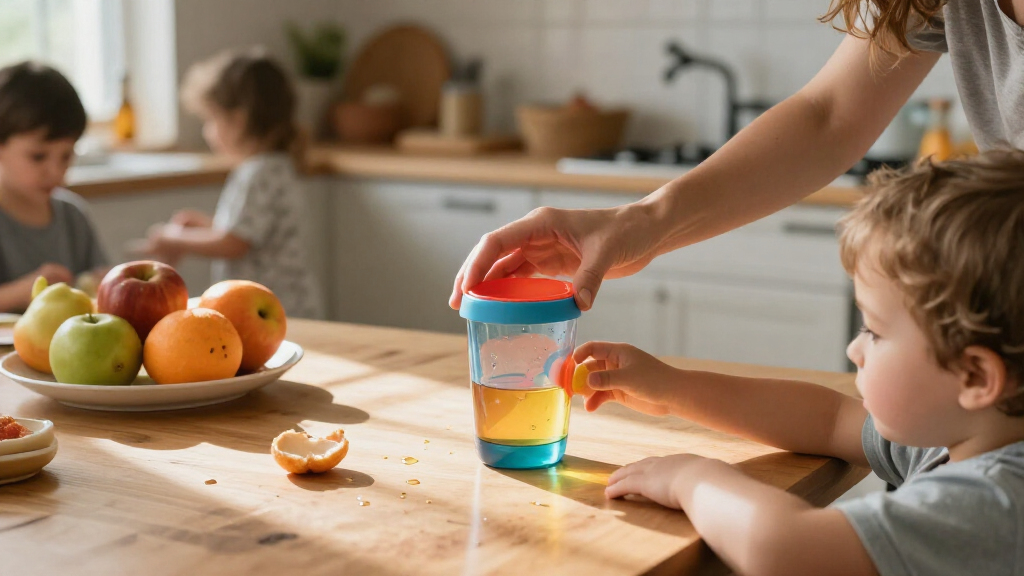
Getting children to drink while active was another reported obstacle. Forty-five percent of parents said they find it difficult to encourage water during playtime. Among parents of three-year-olds, nearly half said letting the child choose a cup can encourage drinking. More than one in five said they let their child drink from an infant bottle rather than a cup to help ensure they get fluids.
The Knowledge Gap Behind Hydration
The findings highlight a mismatch between parents’ confidence and reported knowledge, as well as the day-to-day work involved in encouraging young children to drink. That matters to families because babies and toddlers may not reliably recognise or explain thirst, while adults may not know what amount or routine is appropriate for their child.
Paediatric dietitian Lucy Upton told MadeForMums that hydration can be overlooked when caregivers focus on food during weaning and early childhood. She said it can be harder to track drinks than meals, particularly across a busy day. Upton also said mild dehydration may contribute to symptoms such as constipation, headaches, poor concentration and tiredness, which parents might not connect with drinking. These are her general observations, not findings measured by the survey.
The results should not be read as a clinical assessment of the children involved: the survey asked parents about their experiences and beliefs. Still, the high reported level of difficulty suggests why practical guidance on offering drinks and learning cup skills is relevant to parents of young children.
children's water bottles with spill-proof lid
As an affiliate, we earn on qualifying purchases.
As an affiliate, we earn on qualifying purchases.
Cup Practice From Early Months
The amount of fluid a young child needs can vary with age, activity and weather, according to the report. Upton’s advice is to offer drinks regularly, with particular attention during warm weather and active play, rather than relying only on a child to ask for water. Families with questions about an individual child’s fluid needs should seek advice from a paediatrician or other qualified health professional.
Moving from a bottle to a cup was a reported sticking point. Among parents who said they struggled with their child’s hydration, three-quarters found the bottle-to-cup change challenging. The report also says 51% of that group felt their child should have moved on from a bottle sooner, and the same share wished they had received more guidance about the change.
Upton recommends offering small sips from a cup with meals from around six months, modelling cup drinking and allowing time to practise without pressure. She described cup drinking as a skill that develops over time, involving a move from sucking to sipping. The report also says learning to drink from a cup can support oral skills and help prevent toddlers from filling up on milk as they enter their second year. Readiness and progress can differ between children.
“Hydration is often the forgotten friend of weaning and early childhood feeding.”
— Lucy Upton, paediatric dietitian, in comments published by MadeForMums
As an affiliate, we earn on qualifying purchases.
What the Survey Cannot Establish
The findings describe what 1,000 surveyed parents said; they do not establish how much water each child drank, whether any child was dehydrated, or how representative respondents are of all UK families. The supplied report does not provide the survey’s full questionnaire, sampling method, margin of error, or the precise daily amount respondents were asked to identify. It also does not break down the 93% figure by age or explain how “struggle” was defined.
The report names Munchkin as the survey’s commissioner and includes advice alongside information about the company’s cup range. That commercial context is relevant when interpreting the material. The available source does not report an independent clinical assessment of the advice or any evidence comparing the products with other cups.
It is also unclear from the report whether parents’ stated difficulty corresponds to a shortfall in children’s overall fluid intake. The headline figure concerns water, while young children may receive fluid from other drinks and foods; the survey details provided do not quantify those sources.
As an affiliate, we earn on qualifying purchases.
Practical Guidance for Families
The report does not announce a follow-up study or a new public-health programme. Its immediate takeaway is practical: offer water regularly, make opportunities part of meals and daily routines, let children see adults drinking water, and give them time to practise with a cup. Upton advises introducing cup sips from around six months, while recognising that learning takes practice.
Parents considering changes to a child’s drinks or feeding routine can check age-appropriate guidance with a paediatrician or qualified dietitian, especially if they are concerned about hydration, symptoms or a child’s individual needs. The survey’s findings do not substitute for that advice. No further data or next survey milestone was specified in the source report.
water bottles for children with measurement markings
As an affiliate, we earn on qualifying purchases.
As an affiliate, we earn on qualifying purchases.
Key Questions
What did the survey find?
A Munchkin-commissioned survey reported that 93% of 1,000 UK parents of children aged six months to three years struggle to get their child to drink enough water. It asked parents about their experiences; it did not measure children’s intake.
How many parents knew the recommended daily amount?
Although 81% said they felt confident about how much their child should drink each day, only one in six correctly identified the recommended amount, according to the report. The supplied material does not state the exact volume used in the question.
When does the dietitian suggest offering a cup?
Paediatric dietitian Lucy Upton advises offering small sips from a cup with meals from around six months, modelling the skill and allowing time to practise. Children may progress at different rates; families can ask a paediatrician for guidance about their child.
What did the report say about squash and cordial?
More than a third of surveyed parents said they add squash or cordial to encourage children to drink. The report cites a 2025 Scientific Advisory Committee on Nutrition recommendation that children under five avoid drinks containing sugar or non-sugar sweeteners, including sugar-free squash.
Does the survey prove that 93% of young children are dehydrated?
No. The figure reflects parents reporting difficulty getting children to drink enough water. The survey details provided do not establish children’s actual fluid intake or diagnose dehydration.
Source: rss
Evergreen bestsellers Picks
bestsellers
As an affiliate, we earn on qualifying purchases.