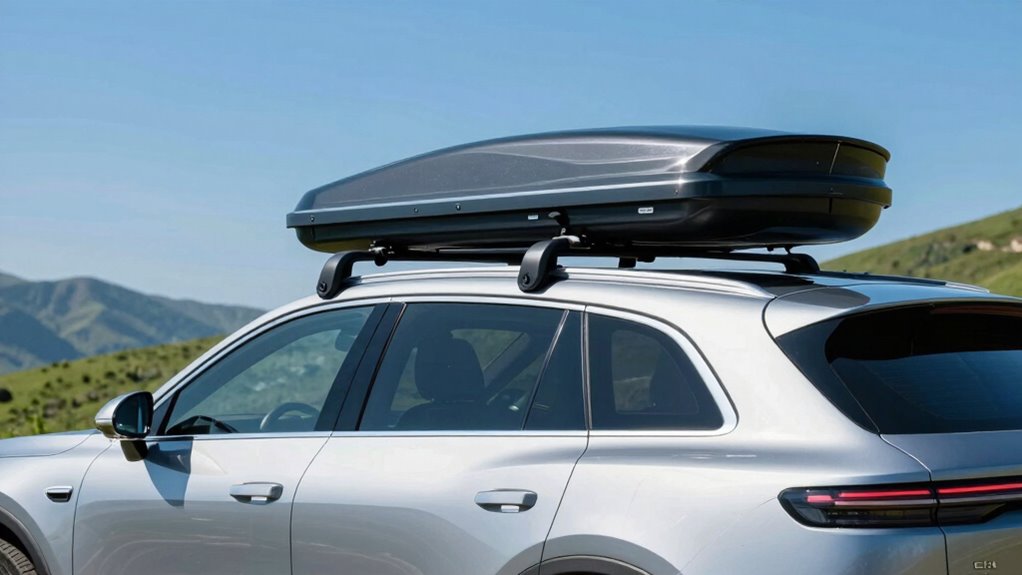

To pick the right rooftop cargo box size without hitting the hatch, start by measuring your roof’s length and height, considering clearance from nearby objects and features like roof rails or antennas. Match the box length to your gear and make certain it’s not too wide to interfere with the hatch. Also, check your vehicle’s height and hatch opening dimensions. Using these measurements and manufacturer guidelines helps prevent overhang or contact—continue exploring for more tips.

Turn the school run and nap time into listening time
- Thousands of audiobooks, podcasts and originals
- Listen on your phone, tablet or Echo — also offline
- Cancel anytime
Key Takeaways
- Measure your vehicle’s roof dimensions and hatch clearance to ensure the cargo box fits without hitting the hatch or roof features.
- Match the cargo box length and width to your gear size and roof rack capacity, avoiding overhang or obstruction issues.
- Check hatch height requirements for your vehicle type, ensuring the box height doesn’t interfere with opening or closing the hatch.
- Confirm roof rack compatibility and secure attachment points to prevent shifting or overhang that could cause damage.
- Consider aesthetic and safety factors, selecting a size that complements your vehicle while maintaining safe clearance and access.
Products Worth Considering

Doona Car Seat and Stroller Travel System, Nitro Black

Graco Modes Nest 3-in-1 Travel System with SnugRide 35 Lite Elite Infant Car Seat, Sullivan

Owlet Cam 2 Smart Baby Monitor with HD Video, Night Vision, Two-Way Talk, and Temperature and Humidity Sensors
As an affiliate, we earn on qualifying purchases.
Why Choosing the Right Rooftop Cargo Box Size Matters
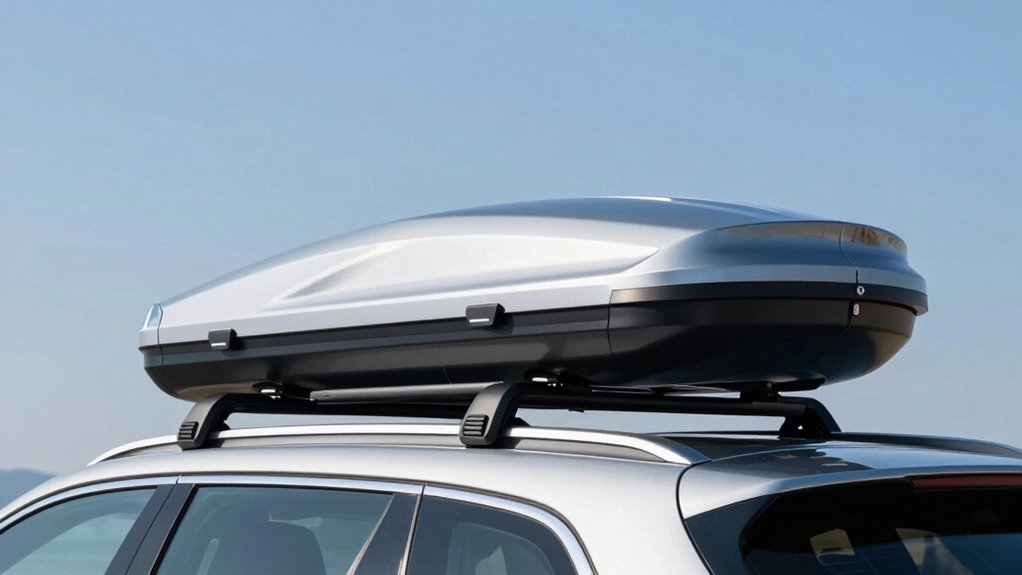
Choosing the right rooftop cargo box size is vital because an ill-fitting box can compromise your vehicle’s safety and performance. If the cargo box is too large or heavy, it can put undue stress on your roof and affect handling. The cargo box weight is essential; exceeding weight limits can damage your roof or impair stability. Additionally, consider the rooftop material—lighter materials like ABS or fiberglass can reduce overall weight, making your setup safer and easier to manage. A properly sized cargo box ensures you maximize space without risking safety or vehicle damage. Oversized or overly heavy boxes can lead to decreased fuel efficiency and unpredictable driving. Always select a size that balances your storage needs with your vehicle’s load capacity for a safe, smooth journey. Proper aerodynamic design can also help minimize wind resistance and noise during travel, especially when paired with weight distribution considerations to improve stability. Furthermore, understanding your vehicle’s roof load capacity is crucial to prevent potential damage and ensure safe transportation. Being aware of herbal properties of materials used in cargo boxes can also help you choose options that minimize corrosion or damage over time.
How to Measure Your Vehicle’s Roof Space Accurately
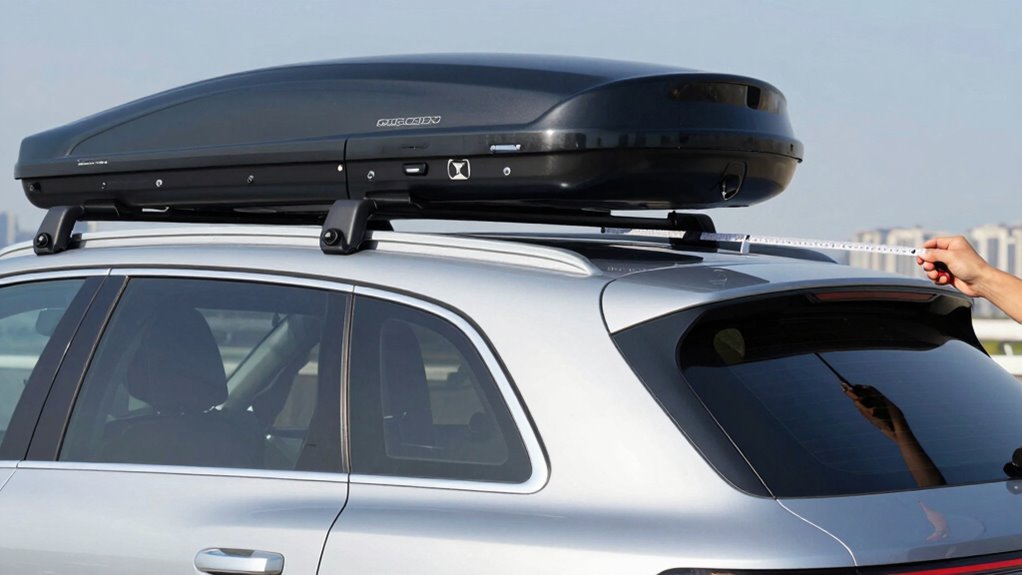
Start by measuring your roof’s length to make certain your cargo box fits properly. Check the side clearances to avoid any obstacles or overhangs that could cause issues. Don’t forget to look for obstructions like roof racks or antennas that might affect the space available.
Measure Roof Length
To guarantee your rooftop cargo box fits perfectly, you’ll need to measure your vehicle’s roof length accurately. Start by locating your roof rack, as it often defines the usable space. Use a tape measure to determine the distance from the front to the rear of the rack, ensuring you measure along the roof’s surface, not just the side panels. Keep in mind your vehicle height, so you can account for clearance when loading or parking in garages. If your roof rack extends beyond the roof, measure only the length of the rack itself. Precise measurements prevent overloading and ensure compatibility with your cargo box. Taking these steps helps you choose a box that fits snugly without hitting the hatch or other parts of your vehicle. Understanding vehicle dimensions ensures you select the appropriate size for your needs. Additionally, consulting your vehicle’s manufacturer specifications can provide helpful guidance on maximum roof load and available space.
Check Side Clearance
Wondering how to guarantee your cargo box fits comfortably on your roof? Start by checking the side clearance to ensure enough space between the roof and any nearby objects or roof rails. Measure the distance from the side of your vehicle’s roof to adjacent obstructions, like side mirrors or roof racks, so you avoid hitting them during installation. This step helps prevent damage and ensures safe, easy mounting. While measuring, consider aesthetic considerations—choosing a cargo box that complements your vehicle’s color for a sleek look. Matching the color can enhance your vehicle’s appearance and give a cohesive feel. Conducting a comprehensive measurement before purchasing will help you select the right-sized cargo box. Performing a proper clearance check ensures your cargo box fits securely without compromising style or safety. Accurate side clearance checks make sure your cargo box fits securely without compromising style or safety, and precise measurements are key to avoiding potential fitting issues. Additionally, understanding vehicle roof weight limits can prevent overloading and ensure safe driving conditions. Being aware of your vehicle’s maximum roof load capacity helps avoid structural damage and maintains optimal handling.
Consider Obstructions
Measuring your vehicle’s roof space accurately requires identifying any potential obstructions that might interfere with installing your cargo box. Check for roof rack compatibility first, making sure your racks can support the box’s size and weight. Look for antennas, sunroofs, or roof rails that could block the cargo box’s placement or limit clearance. Don’t forget to take into account cargo weight limits—overloading can damage your roof or compromise safety. Also, be aware of external features like gutters, side rails, or protrusions that might reduce available space. Taking these obstructions into account helps you select a cargo box that fits securely and safely, avoiding damage to your vehicle or the box itself. Accurate measurement guarantees a smooth installation process and maximum use of your roof space. Always consider vehicle compatibility to ensure your chosen cargo box fits well with your specific model and setup. Additionally, measuring the roof dimensions precisely can prevent unexpected fitting issues during installation. To further ensure a proper fit, consulting manufacturer guidelines can provide valuable specifications and recommendations, as well as insights into common installation issues to watch out for.
What Are the Common Cargo Box Sizes and Which Fits Your Needs?
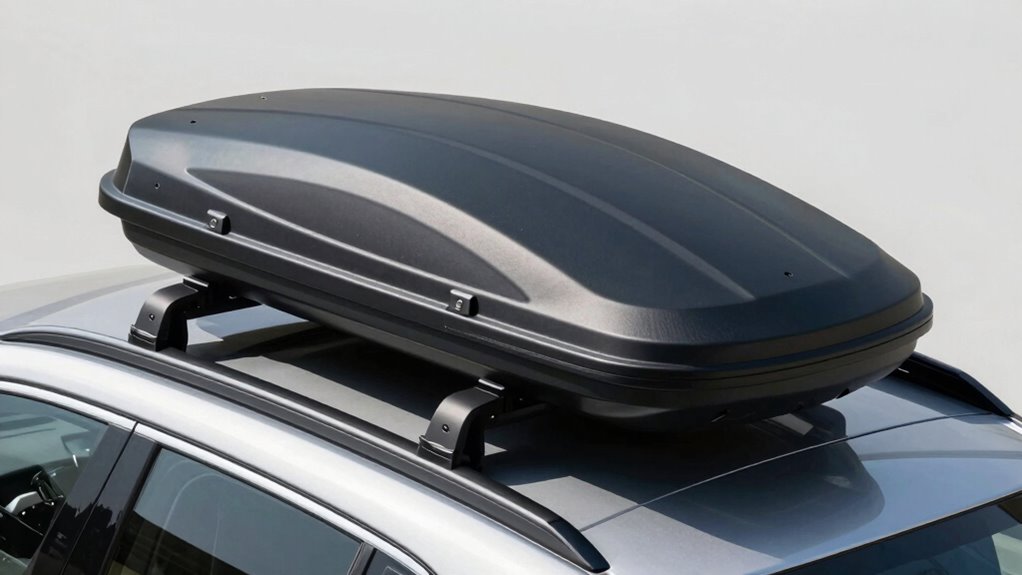
Cargo box sizes vary widely, so choosing the right one depends on your specific needs and vehicle size. Common sizes range from compact models around 8 cubic feet to larger boxes exceeding 18 cubic feet. Smaller cargo boxes suit day trips and light gear, fitting well on basic roof rack styles. Larger boxes are ideal for family vacations or bulky equipment, but they require sturdy materials like durable ABS or fiberglass to withstand weather and road conditions. Think about the type of gear you’ll carry most often and the space available on your roof. If you have a compact car, a smaller box prevents overhang and obstruction. For SUVs and larger vehicles, bigger options maximize cargo capacity without hitting the hatch. Proper mount, OTA, and camera setup considerations can also help optimize space and fitment, especially when transporting delicate or bulky gear. Additionally, considering vehicle compatibility ensures the cargo box fits securely and safely, preventing issues during transit. Taking into account the roof load capacity of your vehicle is crucial to avoid overloading and ensure safety during your trips. Being aware of your vehicle’s weight limits can help prevent damage and improve overall safety when choosing a cargo box size. Picking the right size guarantees convenience and safety.
How to Pick the Perfect Length and Width for Your Gear
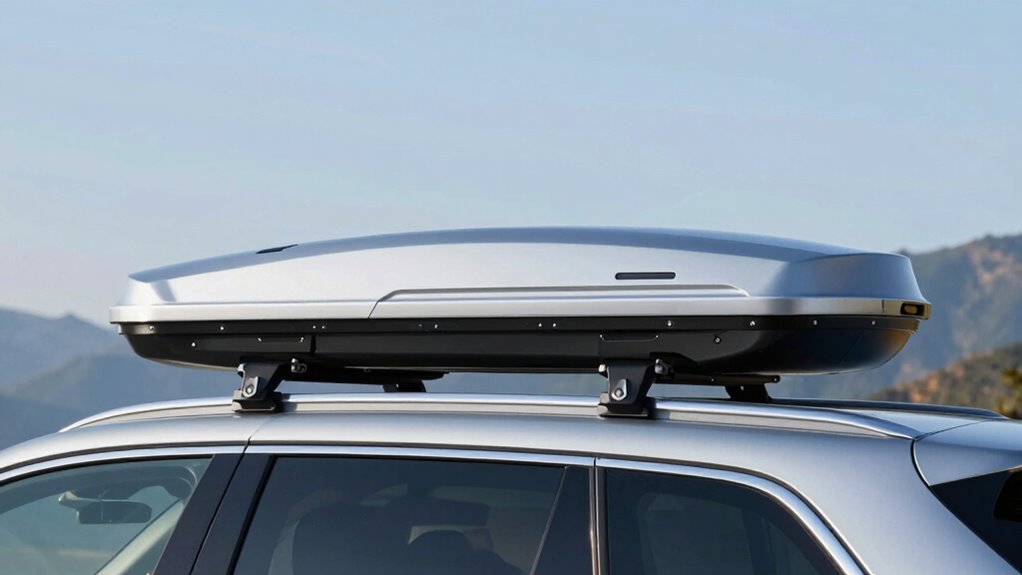
Start by measuring your roof space to make certain the box fits comfortably without blocking access. Then, match the box’s length and width to the size of your gear so everything stores securely. Don’t forget to take into account access points and clearance to make loading and unloading easy. Additionally, considering the installation considerations can help ensure your cargo box is both functional and safe.
Measure Your Roof Space
Before choosing a rooftop cargo box, it’s essential to determine the available space on your roof. Measure the length, width, and height to ensure proper fit. Different roof rack types, like crossbars or side rails, impact how much space you have. Also, consider material durability since it affects how well your rack supports added weight. Use this table to compare your options:
| Roof Rack Type | Max Load Capacity | Material Durability |
|---|---|---|
| Crossbars | 150-220 lbs | Steel, Aluminum |
| Side Rails | 100-180 lbs | Aluminum, Plastic |
| Flush Rails | 120-200 lbs | Steel, Composite |
Knowing your roof’s dimensions helps you pick a box that fits without hitting the hatch or overloading. It’s also helpful to be aware of unplanned weather changes, which can lead to unexpected and humorous outcomes during your trip. Planning for weather variability ensures your gear remains secure and undamaged regardless of the forecast.
Match Gear Dimensions Precisely
Choosing the right rooftop cargo box starts with matching its dimensions to your gear. For mountain biking gear, verify the box’s length can comfortably fit bikes or accessories without forcing you to fold or disassemble. If you’re traveling with pets, measure their carriers or bedding to ensure they fit securely without sticking out or causing imbalance. Pay attention to width, too—your gear should sit snugly to prevent shifting during transit. Proper dimension matching is essential for safe and efficient vehicle packing, especially when considering the hatch clearance to avoid accidental hits. Using a tape measure to double-check the dimensions of your gear and compare them with the cargo box specs can help prevent overpacking and ensure a precise fit. Selecting a box that aligns perfectly with your gear’s size makes loading easier, keeps your items secure, and ensures smooth, hassle-free trips.
Consider Access and Clearance
To guarantee your gear fits comfortably and is easy to load, consider how access points and clearance impact your choice of cargo box dimensions. You want to avoid awkward angles or difficult reach, which can make packing frustrating. Think about the placement of your vehicle’s hatch or rear door—will the box block access or require awkward maneuvers? Additionally, aesthetic considerations matter—selecting a size that complements your vehicle’s look, including color matching, enhances your overall style.
- Make sure the box doesn’t obstruct your hatch, making loading effortless.
- Choose a size that aligns with your vehicle’s proportions for visual harmony.
- Pick a cargo box that’s easy to open and close without hitting the hatch or roof.
- Consider how color matching your vehicle elevates the aesthetic appeal and personalizes your ride.
Will This Cargo Box Fit My Vehicle’s Hatch and Clearance?
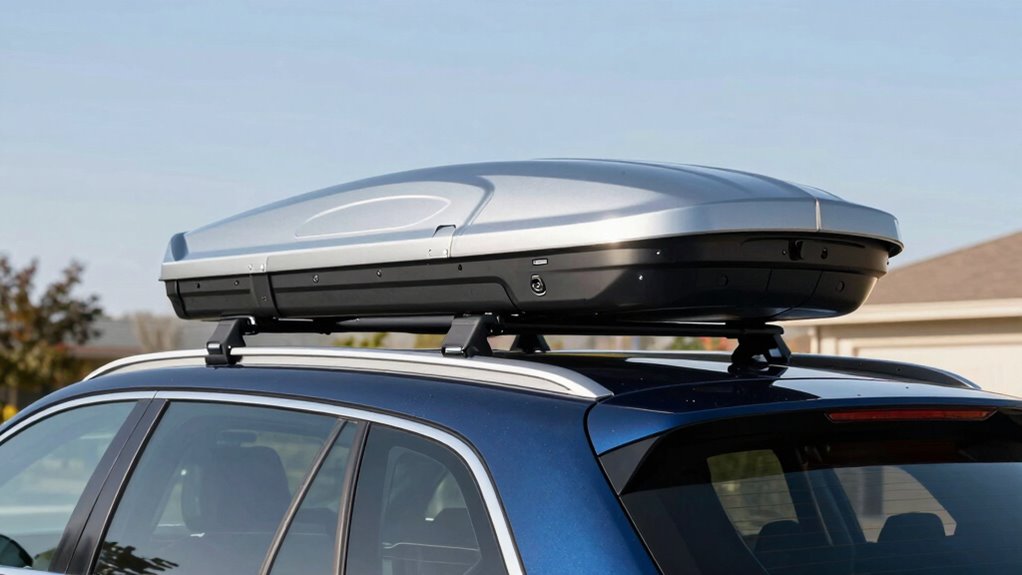
Wondering if a cargo box will fit your vehicle’s hatch and provide enough clearance? To verify proper fit, measure your vehicle’s hatch height and width, then compare it to the cargo box dimensions. You want enough space for interior storage and cargo organization without risking contact or overhang. Here’s a quick reference:
| Vehicle Type | Hatch Height | Clearance Needed |
|---|---|---|
| Sedan | 20-24 inches | 2-4 inches |
| SUV | 24-30 inches | 3-6 inches |
| Minivan/Van | 25-30 inches | 4-6 inches |
Make sure the cargo box’s height doesn’t interfere with your hatch’s opening. Proper clearance prevents damage and ensures easy access.
Expert Tips for Preventing Overhang and Ensuring a Secure Fit

Ensuring your cargo box fits securely without overhanging or shifting requires careful attention during installation. Start by selecting a roof rack with a sturdy roof rack material that matches your vehicle’s weight capacity. Check the color options to ensure the box visually complements your car and doesn’t distract you while driving. To prevent overhang, always measure your vehicle’s roof and cargo box beforehand. Use proper mounting techniques, tightening straps evenly for a snug fit.
- Feel confident knowing your gear is safe and secure, ready for your adventure.
- Avoid the anxiety of shifting cargo that can cause accidents or damage.
- Enjoy peace of mind with a professional, tight fit that lasts.
- Experience the pride of a well-secured, streamlined setup.
How to Balance Storage Capacity and Aerodynamics for Better Fuel Efficiency
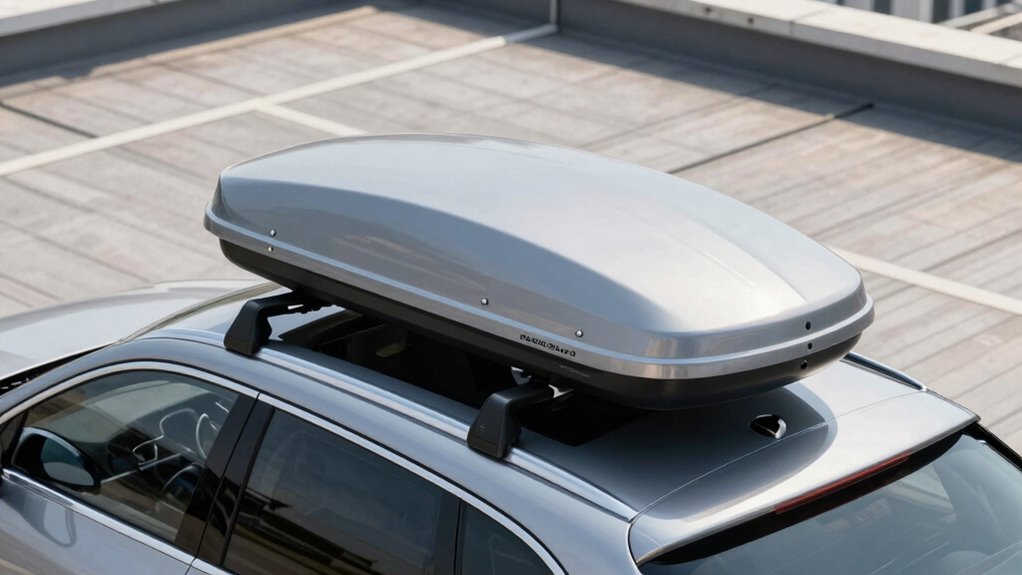
Balancing storage capacity and aerodynamics is essential for maximizing fuel efficiency when using rooftop cargo boxes. An oversized box increases storage but can markedly impact aerodynamic performance, causing more drag and reducing fuel efficiency. To minimize this aerodynamic impact, choose a size that fits your needs without overextending beyond your vehicle’s roofline. Keep the box as low and streamlined as possible, avoiding unnecessary overhangs or bulky shapes that disrupt airflow. Properly securing the box ensures it stays aligned with your vehicle’s aerodynamic profile, preventing additional turbulence. By selecting the right size and shape, you improve fuel economy while still providing ample storage. Remember, a well-balanced cargo box enhances your driving experience without compromising efficiency.
Using Manufacturer Guidelines and Compatibility Charts Effectively
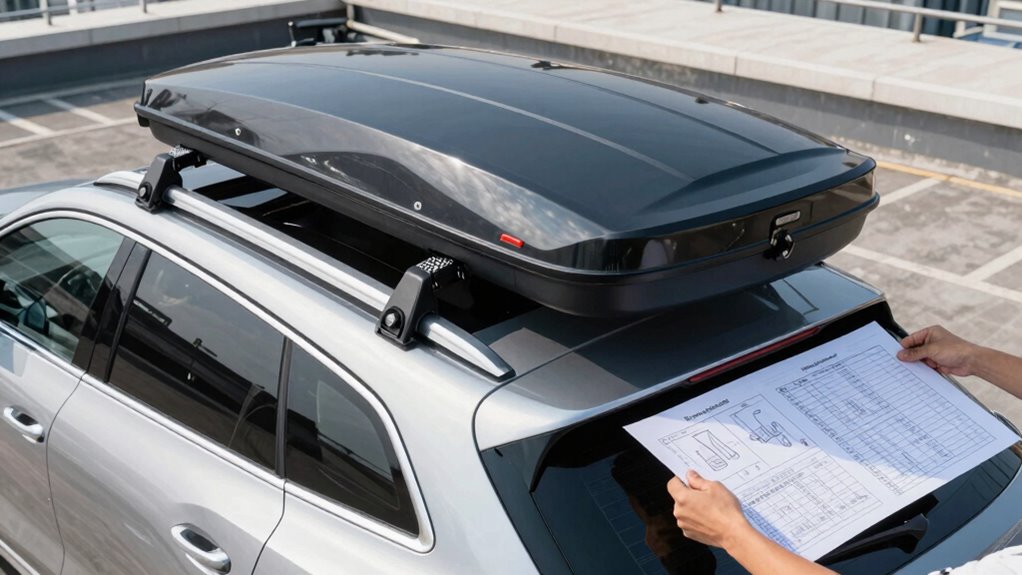
To make certain your rooftop cargo box fits and performs safely, you need to understand your manufacturer’s specifications carefully. Compatibility charts help you match the box to your vehicle, but you should also cross-check your vehicle’s dimensions for a perfect fit. By combining these resources, you’ll avoid costly mistakes and choose the best option for your needs.
Understanding Manufacturer Specifications
Understanding manufacturer specifications is essential when selecting a rooftop cargo box that fits your vehicle. These details guide you to choose the right size, mounting hardware, and weight limits, ensuring safety and compatibility. Ignoring these specs can lead to dangerous situations, like instability or damage. Always check the recommended weight limits to avoid overloading, which could compromise your vehicle’s handling. Pay attention to mounting hardware compatibility to ensure a secure fit. By thoroughly reviewing manufacturer guidelines, you avoid surprises and protect your investment. Remember, following these specifications isn’t just about fitting; it’s about safe, confident traveling.
- Feel confident knowing your cargo is secure and safe
- Avoid costly damage caused by incompatible hardware
- Experience peace of mind on every trip
- Maximize your vehicle’s potential without risking safety
Navigating Compatibility Charts
When selecting a rooftop cargo box, referring to compatibility charts can save you time and prevent mistakes. These charts help you match the cargo box to your vehicle’s roof rack system, ensuring proper fit and safety. Always check the roof rack load capacity before choosing a box; exceeding this limit can compromise stability and damage your vehicle. Compatibility charts also specify maximum cargo weight, so you don’t overload the rack. Focus on manufacturer guidelines to confirm that the cargo box is compatible with your roof rack type and size. By cross-referencing these charts, you’ll avoid purchasing a box that doesn’t fit or risks exceeding weight limits. This proactive step helps you select a safe, functional cargo box that maximizes storage without hitting the hatch or overloading your roof rack.
Cross-Checking Vehicle Dimensions
Checking your vehicle’s dimensions against manufacturer guidelines and compatibility charts guarantees your rooftop cargo box fits securely and functions safely. Take the time to measure your roof rack material and compare it to the box’s specifications. This ensures you avoid surprises that could compromise safety or damage your vehicle. When cross-checking, consider your vehicle’s color coordination for a sleek look, especially if you want your cargo box to blend seamlessly. Remember, the right size enhances your travel experience and reduces stress. Be confident in your choice by verifying maximum height and width limits. Making these careful checks gives you peace of mind, knowing your gear is secure and your vehicle remains protected. Don’t rush—precision today guarantees smooth adventures tomorrow.
Common Mistakes to Avoid When Selecting a Cargo Box Size
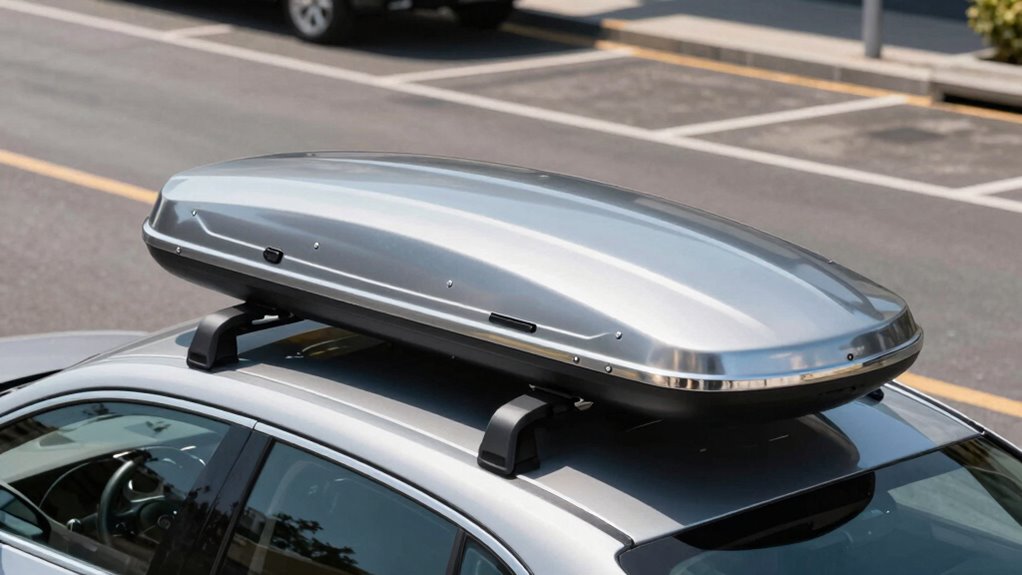
Choosing the wrong cargo box size can lead to unnecessary frustration and inconvenience. One common mistake is not considering the interior space you need for your gear—oversized boxes might seem appealing but can make loading difficult or block access to your hatch. Conversely, a too-small box limits what you can carry. Another mistake is ignoring cargo weight limits; a box that’s too large or heavy for your roof rack can compromise safety and handling. Always check your vehicle’s maximum roof load and ensure your cargo stays within those limits. Failing to measure your interior space and cargo weight capacity can result in a box that doesn’t fit or causes strain on your vehicle. Avoid these pitfalls for a smoother, safer experience.
Final Checklist: How to Choose a Rooftop Cargo Box That Fits Perfectly
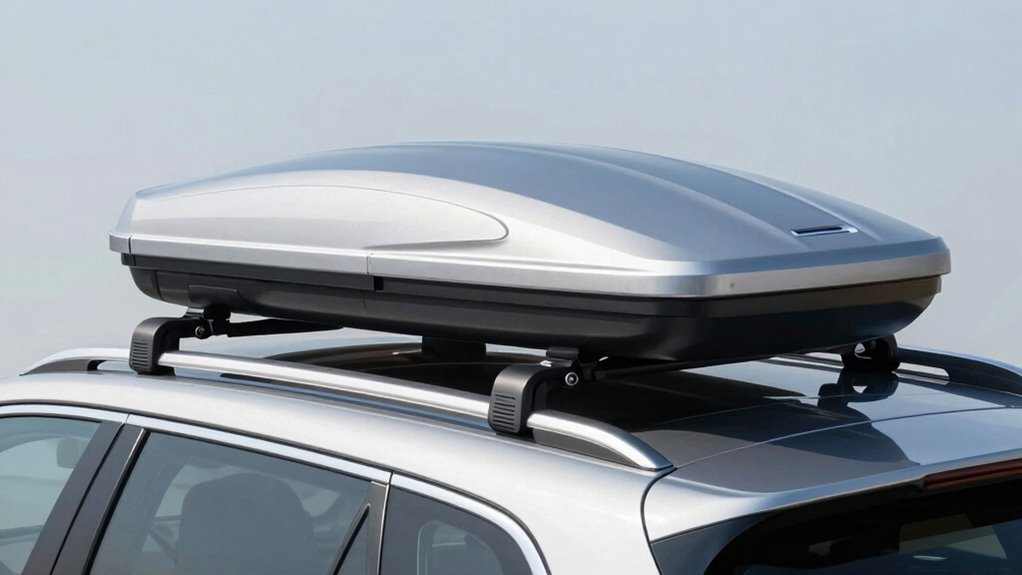
To guarantee your rooftop cargo box fits perfectly and meets your needs, it’s important to follow a thorough checklist before making a purchase. First, verify roof rack compatibility to ensure the cargo box attaches securely to your vehicle. Next, consider the size—make sure it’s large enough for your gear but won’t hit the hatch or overhang the roof. Check cargo box security features like locks and reinforced materials to keep your belongings safe. Also, assess ease of installation and removal to avoid frustration during trips.
- Feel confident your gear is protected and secure
- Avoid costly returns or adjustments
- Ensure seamless compatibility with your vehicle
- Drive with peace of mind knowing your cargo box is safe
Frequently Asked Questions
Can I Install a Cargo Box on Any Vehicle Roof?
You can’t install a cargo box on any vehicle roof because of vehicle roof compatibility issues. Check your vehicle’s roof weight limit and whether it has factory-installed rails or crossbars. Use cargo box installation tips like measuring your roof and verifying fit before buying. If your vehicle lacks the necessary support, consider adding aftermarket roof racks to guarantee safe, secure attachment and avoid damaging your car or cargo.
How Does Cargo Box Weight Affect Vehicle Handling?
Adding weight to your cargo box influences your vehicle’s handling, impacting vehicle weight distribution and handling stability. A heavier cargo box shifts the center of gravity upward and forward, making your vehicle more prone to sway, especially in turns or gusty winds. To maintain control, distribute weight evenly, avoid overloading, and be mindful of the added weight’s effect on overall handling and safety during your drive.
Are There Legal Restrictions on Cargo Overhang?
Yes, there are legal limits on cargo overhang, and overhang regulations vary by state or country. You need to check local laws to make certain your cargo doesn’t exceed the maximum allowed overhang, typically a few feet from the vehicle’s rear bumper. Failing to comply can lead to fines or safety issues. Always measure your cargo and consult your local regulations to stay within legal limits and ensure safe driving.
How Do Weather Conditions Impact Cargo Box Choice?
They say “hope for the best, prepare for the worst,” and that’s true for weather conditions affecting your cargo box. You should prioritize weather durability and climate considerations when choosing a box. If you face frequent rain, opt for waterproof, UV-resistant materials. For snowy or icy environments, verify it’s sturdy enough to withstand harsh conditions. Being prepared helps protect your gear and ensures safe, worry-free trips.
What Maintenance Is Required for Rooftop Cargo Boxes?
You should regularly inspect your rooftop cargo box for damage, clean it with mild soap and water, and check the security features to make certain they’re functioning properly. Aesthetic considerations matter too; keep it looking good by removing dirt and grime. Also, tighten mounting hardware as needed. Proper maintenance keeps your cargo box secure, extends its lifespan, and maintains its appearance, making your trips safer and more enjoyable.
Conclusion
So, you’ve now mastered the art of choosing the perfect rooftop cargo box—just in time for those “hitting the hatch” surprises. Ironically, after all that measuring and planning, you might still find yourself marveling at how something so small can cause such big headaches. But hey, at least now you’re prepared to avoid the awkward dance of squeezing in gear without knocking your hatch. Happy packing—and may your roof never hit the roof!