
TL;DR

Get baby and family essentials delivered free — and shop member deals
- Fast, free delivery on millions of items
- Access to Prime Big Deal Days deals on October 6–7
- Prime Video, Amazon Music and more included
A first-person Motherly report, updated Sept. 30, 2026, describes the writer’s severe back pain during labor and argues that expectant parents should be told this can happen. An OB-GYN says back labor may be associated with a baby’s position but is not a definitive sign of it; individual causes can be difficult to establish.
Motherly updated a first-person report on Sept. 30, 2026, describing a writer’s severe lower-back pain during labor and arguing that expectant parents should be warned that labor pain may be felt predominantly in the back. The report includes an OB-GYN’s explanation of back labor, while stressing that the pain alone cannot establish the baby’s position or explain its cause.
The writer says she had heard little about back labor before a friend described her experience during a conversation at about 20 weeks of pregnancy. At 37 weeks, the writer woke with intense back pain that she thought might be labor. She went to a hospital, where a nurse told her, “It could be!” The writer says she was sent home to rest after staff determined the baby was fine at that time and the pain had eased.
The pain returned the following night, accompanied by vomiting, and the writer says she went back to the hospital. She reports that the baby’s heart rate then became a concern and her care team monitored it alongside her contractions. She describes struggling to identify contractions as they happened, because the back pain was the sensation she noticed. The account does not provide a diagnosis explaining the pain or the heart-rate concern.
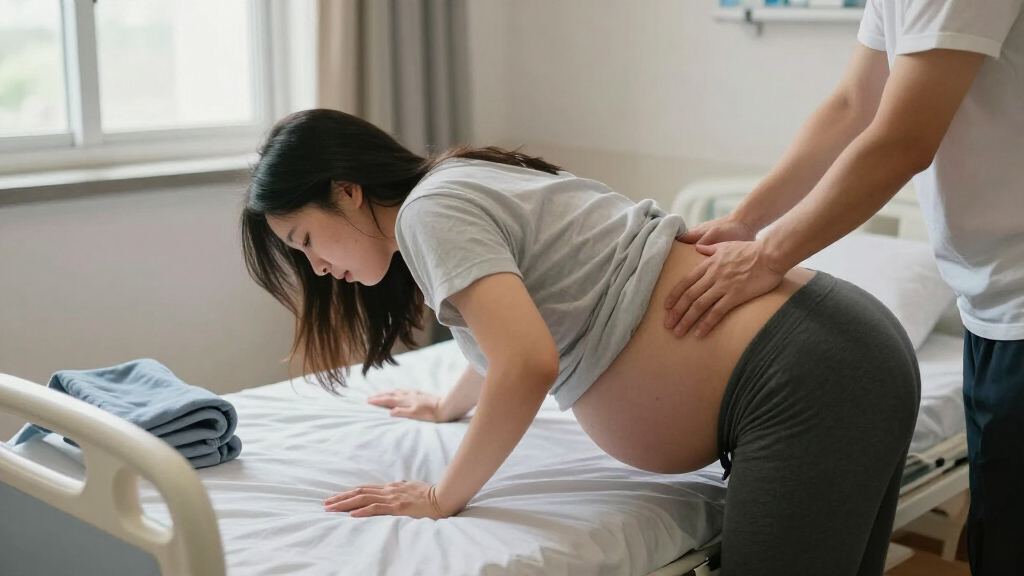
Brandye Wilson-Manigat, a board-certified OB-GYN quoted in the report, defines back labor as intense lower-back pain during labor. She says a baby’s position may put pressure on the mother’s sacrum, tailbone and surrounding tissues, and that the pain can feel like constant pressure or sharp pain that worsens with contractions. She also cautions that pain varies between people and that back pain is not a definitive sign that the baby is positioned posteriorly.
Preparing for Pain Beyond Contractions
The report highlights a gap between familiar depictions of labor and the range of sensations some people may experience. The writer expected to recognize contractions and says she instead struggled to distinguish them from severe, persistent back pain. Her account is personal rather than evidence of how often this occurs, but it shows why prenatal discussions that cover only one expected pattern can leave some people feeling unprepared.
For readers planning for birth, the practical point is awareness, not a prediction: back pain can accompany labor, and its intensity and pattern may differ from person to person. Knowing the term may help someone describe symptoms to a care team, but the report does not offer a way to diagnose back labor at home. Individual symptoms and concerns should be discussed with a qualified maternity-care professional.
The story also distinguishes preparation from certainty. An explanation involving fetal position may help make sense of some cases, but it cannot account for every person’s experience. The writer’s broader argument is that the possibility deserves mention even if it is not what most people experience or discuss.
As an affiliate, we earn on qualifying purchases.
What the Report Says About Causes
Wilson-Manigat says back labor is thought to occur when a baby’s position increases pressure on structures in the lower back during contractions. A posterior position, in which the back of the baby’s skull rests against the back of the mother’s pelvis, can be a clue, she says, but back labor does not prove that position. The report also names pelvic shape or size, a baby being too large for the available space, and factors that prevent rotation as possible contributors.
The article says clinicians cannot always identify exactly why a person has back pain during labor. It also notes that back labor is not a separate kind of labor; it is a way labor pain may be experienced. Some coping approaches may overlap with those used for other labor pain, but the report does not set out a treatment plan or compare specific methods.
The first-person account is the basis for the report’s appeal to include back labor in birth preparation. It does not present a survey, prevalence estimate, or new clinical research. Its medical context comes from Wilson-Manigat’s comments, while the events at the hospital are described by the writer.
““Back labor is a term used to describe intense pain in the lower back during labor.””
— Brandye Wilson-Manigat, board-certified OB-GYN, as quoted by Motherly
pregnancy labor pain relief pillow
As an affiliate, we earn on qualifying purchases.
As an affiliate, we earn on qualifying purchases.
Why Each Case Can Differ
The report does not establish what caused the writer’s pain, whether the baby was in a posterior position, or whether her experience fits a specific clinical diagnosis. It says the baby’s heart rate became a concern during the second hospital visit but gives no further detail about the monitoring, outcome or relationship, if any, between that concern and the back pain.
It also provides no estimate of how common back labor is and no research comparing its frequency, severity or treatments with other labor experiences. Wilson-Manigat says pain is subjective and fetal position is only one possible factor. The article’s account should not be read as medical advice or as evidence that intense back pain necessarily means labor has begun.
As an affiliate, we earn on qualifying purchases.
How Birth Preparation Can Respond
Motherly’s report makes a case for including back labor among the possibilities discussed during prenatal education, alongside the reminder that experiences vary and causes may remain uncertain. It does not announce a change to medical guidance or describe a formal program that will add the topic to childbirth classes.
For readers preparing for birth, the article offers awareness rather than a set of instructions. Anyone with concerns about pain or possible labor can contact their maternity-care team for guidance suited to their circumstances. The report does not specify a clinical follow-up for the writer or say whether additional reporting on back labor is planned.
As an affiliate, we earn on qualifying purchases.
Key Questions
What does back labor mean?
Back labor describes intense pain in the lower back during labor. The Motherly report says some people describe constant pressure, while others experience sharp pain that worsens with contractions.
Does back labor confirm that a baby is positioned posteriorly?
No. OB-GYN Brandye Wilson-Manigat says a posterior position may be one clue, but back pain is not definitive proof of a baby’s position.
Does the report explain what caused the writer’s pain?
No. The writer describes severe back pain and hospital monitoring, but the report does not give a confirmed diagnosis or establish the cause of the pain.
Is back labor a separate kind of labor?
The report says it is not a separate type of labor, but a way labor pain may be experienced. It notes that some coping strategies may overlap with approaches to other labor pain.
What should someone do if they are concerned about pain during pregnancy or labor?
The article does not provide a home diagnosis or treatment plan. People with concerns should contact their maternity-care team for guidance specific to their situation.
Source: rss
Fall Picks
fall essentials
As an affiliate, we earn on qualifying purchases.